
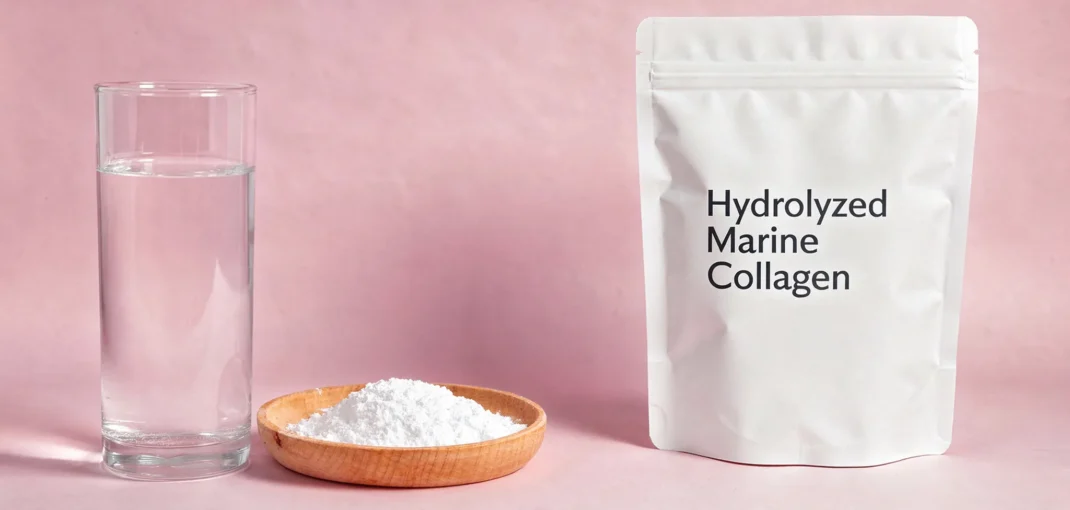
Hydrolyzed marine collagen is a form of collagen derived from fish skin, scales, or other marine sources. It has been broken down through a process called hydrolysis into smaller protein fragments known as marine collagen peptides. These smaller peptides are easier to dissolve in liquids and may be absorbed more efficiently by the body than intact collagen proteins.
What Is Marine Collagen?
Collagen is the most abundant structural protein in the human body. It helps support:
- Skin elasticity and hydration
- Hair and nail strength
- Joint and cartilage health
- Bones and connective tissues
Marine collagen is primarily composed of Type I collagen, the type most commonly found in skin, tendons, bones, and ligaments.
What Does “Hydrolyzed” Mean?
The hydrolysis process breaks large collagen molecules into smaller peptides. This creates:
- Better solubility in water, coffee, smoothies, and other beverages
- Improved digestibility
- A neutral taste and texture that makes supplementation easier
Because of these characteristics, hydrolyzed marine collagen is often sold as a powder, capsule, or ready-to-drink supplement.
Why Is Hydrolyzed Marine Collagen Popular?
Several factors have contributed to its popularity:
1. Skin Health and Beauty Benefits
Many people use marine collagen peptides to support skin hydration, elasticity, and the appearance of fine lines. Research suggests collagen supplementation may help improve certain markers of skin health, although results vary among individuals.
2. Joint and Bone Support
Collagen is a key component of cartilage and connective tissue. Some users take collagen supplements to support joint comfort and mobility, particularly as they age.
3. High Bioavailability
The small peptide size in hydrolyzed marine collagen is often marketed as being highly absorbable, making it appealing to consumers seeking efficient supplementation.
4. Sustainable Sourcing
Marine collagen is frequently produced from fish-processing byproducts that might otherwise go unused, which can make it attractive from a sustainability perspective.
5. Alternative to Bovine Collagen
People who avoid beef-derived products for dietary, religious, or personal reasons may choose marine collagen as an alternative source.
How Is It Used?
Hydrolyzed marine collagen is commonly added to:
- Water
- Coffee or tea
- Smoothies
- Protein shakes
- Baked goods
Typical serving sizes vary by product, but many supplements provide between 2.5 and 10 grams of collagen peptides per serving.
Hydrolyzed marine collagen is a fish-derived form of collagen that has been broken into smaller, more easily dissolvable marine collagen peptides. Its popularity stems from potential benefits for skin, joints, and connective tissues, along with its convenience, sustainability, and suitability as an alternative to land-animal collagen sources. While research is promising, collagen supplements work best as part of an overall healthy diet and lifestyle rather than as a standalone solution.
IKIGEN offers premium marine collagen peptides in bigger bulk quantities. It is designed to support everyday health and vitality. Its hydrolyzed marine collagen formula features high-quality marine collagen peptides that are easy to mix into daily beverages and routines. By focusing on purity, quality sourcing, and convenience, IKIGEN aims to help consumers incorporate collagen supplementation into a balanced lifestyle. IKIGEN marine collagen can help achieve the health and wellness goals across many industries like food and beverages, supplements, pet foods, animal supplements, beauty and cosmetics to name a few.