If you are looking at the collagen market in 2026 and thinking, “Is there any room left for me?” – the simple answer is – Yes. But there is a catch. The days of just pasting a label on a tub of generic bovine powder and watching the money roll in are over.
The market is crowded and fragmented. People are more aware of collagen now – they do not just want ‘collagen’ anymore; they want solutions for their specific lifestyle. They want collagen that fits in their gym bag, collagen that tastes like a Japanese yuzu treat or collagen that specifically targets joint recovery after a marathon.
The real question is not whether you should start; it’s how fast can you get a high-quality product into the hands of a specific audience?
That is where white label collagen and private label collagen come in. They are the “secrets” of the fastest-growing wellness brands today. In this guide, we are going to break down exactly how to navigate this collagen world, avoid the expensive “newbie” mistakes, and why working with a specialized collagen supplement manufacturer like Nizona, (BioWearth, Nizona Marine Products NMP) group can be the difference between a failed launch and a global brand.
1. White Label v/s. Private Label: Which one is actually for you?
We see founders get confused all the time and it costs them months of wasted time. We will keep it simple.
A. White Label Collagen (Ready formulation – Your label)
- This is a “ready-to-go” product. The manufacturer has already done the R&D and perfected the flavor. You provide the logo and the brand story and they handle the rest.
- Best for: Testing a new market quickly, influencers who want to monetize their audience now, or startups with a smaller initial budget.
- Advantage: You can be selling in as little as 4–6 weeks.
- Disadvantage: Your formulation might be similar to others on the market. You have to win on branding and trust.
B. Private Label Collagen (Your formulation – Your label)
This is where you get to be the “chef.” You want a specific blend of Marine Collagen with Vitamin C, Biotin and maybe some Japanese Matcha? That is private label collagen.
- Best for: Brands that have already seen some success with white labels and want to differentiate or founders who have a truly unique ingredient hook.
- Advantage: Total exclusivity. No one else has your exact “recipe.” Higher margins because you’re offering something unique.
- Disadvantage: Higher MOQs (Minimum Order Quantities) and longer lead times (think 6–10 months for R&D and testing).
The Pro Strategy for 2026: Most successful brands start with white label collagen to “prove” the concept. Once they have 1,000 loyal customers telling them what they like, they switch to a collagen private label model to create a custom version that those customers are begging for.
2. Why Collagen is still a Goldmine (if you pivot)
You might see “Collagen” everywhere on Instagram or TikTok, but the data tells a deeper story. It is no longer just a “beauty trend.” It has become a category staple, much like whey protein or multivitamins. It is consistently the top selling ingredient in the health supplement industry.
In 2026, the demand has moved from “general health” to “targeted functional benefits.” Search queries have shifted. People aren’t just searching for “collagen powder.” They are looking for:
- Japanese marine collagen peptides (for superior absorption)
- Collagen jelly sticks for on-the-go beauty
- Collagen hydration blends for athletes
This “narrowing down” is your entry point. If you try to sell to “everyone,” you sell to no one. But if you launch a private label collagen specifically for “Women 40+ who do Pilates,” suddenly your marketing becomes easy.
3. The “Format” Factor: It’s not just about Powder anymore
If you talk to any experienced collagen supplement manufacturer, they will tell you: The format is the product.
Here is what is winning in the market right now:
A. Collagen Powder Jar
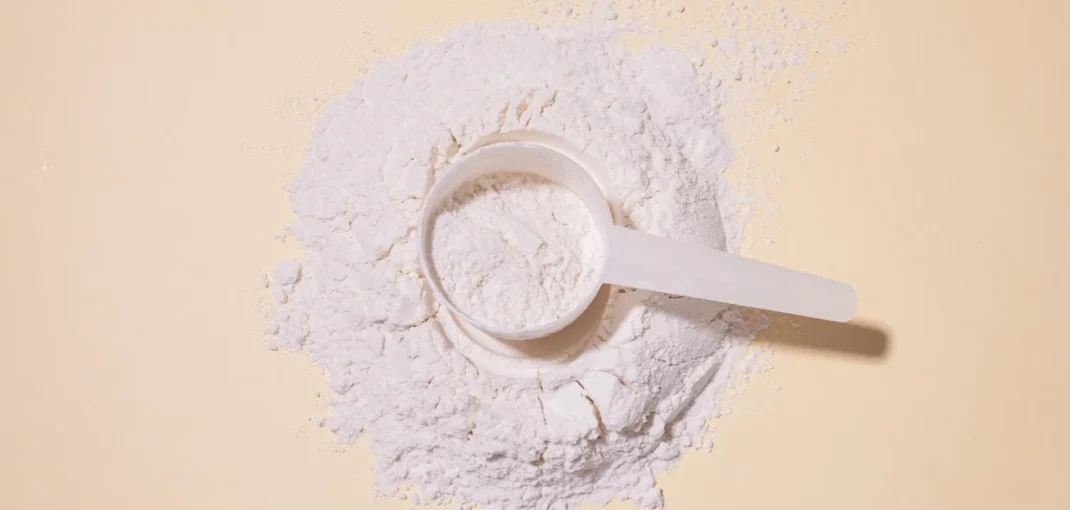
Most beginners default to a big plastic tub of powder because it is the easiest to manufacture. Although a bit boring for the consumer it is still the highest selling format because it is reasonable in cost and convenient for the whole family to use. It can be plain or a natural flvaored, fortified, vitamin enriched powder.
- Why it works: High “habit” potential. It is easy for a customer to take one or two scoops per day.
- The Nizona Advantage: Nizona specializes in these “lifestyle” formats that are big consistent sellers.
B. Ready-to-Drink (RTD) Shots
Imagine a 50ml glass bottle with hydrolyzed marine collagen. It is premium and effective. It feels like “medicine for your skin.”
- Why it works: You can charge a much higher price point per serving compared to powder.
4. Sourcing: Why can Nizona be helpful?
In the world of white label collagen, transparency is the new luxury. Customers are smart. They look at the back of the label. They want to know: Where did this fish come from? How was it processed?
This is why Nizona has become such a powerhouse in this space.
- Hydrolysis Excellence
- Marine Superiority
- Clean Label
5. Step-by-Step: How to actually launch in 90 Days
If you are ready to stop “thinking” and start “selling,” here is the roadmap we recommend:
Phase 1: The Research (Week 1-2)
Do not look at what is popular now. Look at what is missing. Go to Amazon reviews of top brands. Read the 3-star reviews. What are people complaining about?
- “Too clumpy” * “Tastes like fish” * “Wish it was easier to take on my commute” There is your product idea – attend to issues of potential clients in advance!
Phase 2: Finding your Manufacturer (Week 3-4)
You need a collagen supplement manufacturer that does not just treat you like a number. You want a partner. When vetting them, ask:
- What is your MOQ for white label collagen?
- Do you handle export documentation (important if you are selling globally)?
- Can you help with flavor profile adjustments?
Phase 3: Design & Regulatory (Week 5-7)
This is where people get stuck. Your packaging needs to look like it belongs in 2026 minimalist, eco-friendly and clear about the benefits. Crucial Tip: Make sure your manufacturer helps with the “legal” side. Different countries have different rules about what you can claim (e.g., you can not say “Cures wrinkles”). A good partner is great here because they understand international compliance.
Phase 4: Production & Shipping (Week 8-12)
While the factory is manufacturing, you build your “hype.” Get your Shopify store ready. Reach out to micro-influencers in your network. By the time the shipment arrives, you should have a “Waitlist” ready to buy.
6. The Math: Pricing your Brand for Profit
Let us talk about money. If you compete on price, you will lose to the giants. You cannot be “The Cheapest Collagen.” You will get crushed.
Instead, you want to be the “Most Effective” or the “Most Convenient.”
Example Pricing Structure (Estimates):
- Manufacturing Cost (COGS): US$8.00 per unit (including packaging and shipping).
- Wholesale Price: US$16.00 (if you sell to boutiques or gyms).
- Retail Price (D2C): US$35.00 – $45.00.
If you are using high-end private label collagen customers are more than happy to pay $45 for a month’s supply because they trust the quality. If you use cheap, generic powder, you’ll struggle to sell it for $20.
7. Common Mistakes (And how to avoid them)
We have seen hundreds of brands launch. The ones that fail usually make one of these three mistakes:
- Over-complicating the Formula: You do not need 25 ingredients. You need 3-5 that work. Collagen + Vitamin C + 1 Hero Ingredient (like Hyaluronic Acid or Matcha) is often enough for a 10/10 product.
- Ignoring the “Taste Test”: If it tastes like a wet dog, no one will buy it twice. White label collagen is great because the flavors are already tested. If you go custom, spend the extra money on professional “masking” technology to ensure it tastes amazing.
- No Distribution Plan: “If I build it, they will come” is a lie. You need to know exactly where your first 100 customers are coming from before you even sign the manufacturing contract.
8. Why Nizona is the “Shortcut”
If this all feels a bit overwhelming, it’s because it is. Launching a brand involves logistics, chemistry, design, and law.
This is why we recommend working with a group like Nizona. They act as a bridge. They provide a team that understands how to communicate with global startups. Whether you want a simple white label collagen powder or a highly complex, custom-engineered private label collagen jelly stick, they have the infrastructure to make it happen without you needing to go to a factory.
They handle the heavy lifting:
- Sourcing the highest grade of Marine Collagen.
- Managing the MOQs so you do not end up with a garage full of unsold products.
- Ensuring the export paperwork is perfect so your shipment does not get stuck at customs.
Final Thoughts
The collagen market is not “full”—it’s just evolving. The “Generalist” is being replaced by the “Specialist.”
If you have a clear vision of who you want to help – whether it is busy moms, professional athletes or the skincare-obsessed – the tools to build that brand have never been more accessible.
Start with a high-quality base. Choose a format that fits a modern lifestyle. Partner with a collagen supplement manufacturer that values quality as much as you do.
Ready to see what’s possible?
Would you like me to put together a “Product Concept Sheet” for your brand idea to see how it would look as a white label collagen product?